Exploring the map of ancient Greece reveals a fascinating tapestry of city-states that shaped Western civilization. Each city-state, or polis, boasted its own unique culture, government, and way of life, contributing to the rich history that still captivates historians and enthusiasts today. From the militaristic prowess of Sparta to the intellectual pursuits of Athens, these diverse regions formed a complex network of alliances and rivalries.
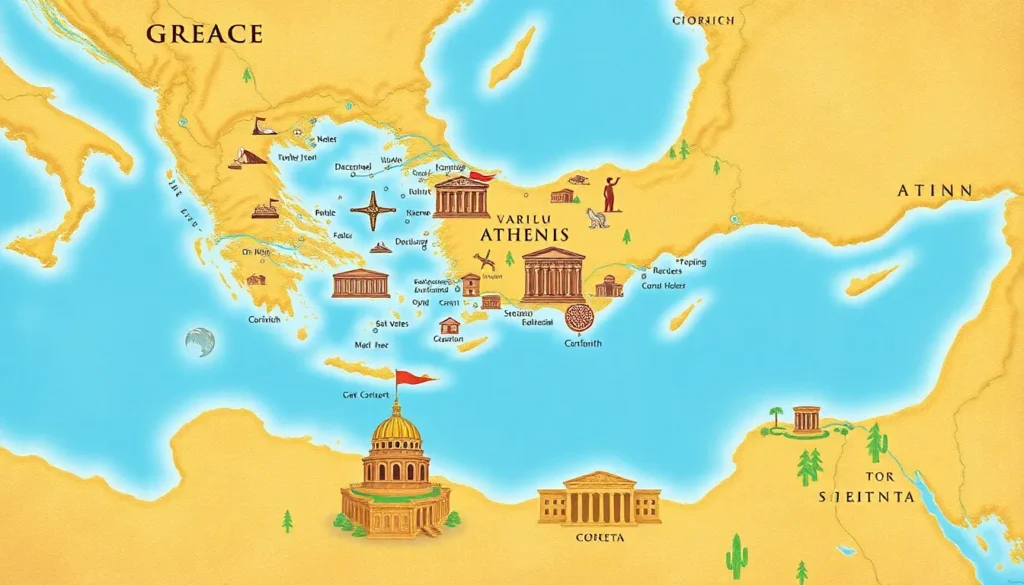
Understanding the geography of these city-states is essential for grasping their historical significance. The rugged terrain and numerous islands influenced trade routes, military strategies, and cultural exchanges. This article delves into the intricate relationships between these city-states, illustrated by a detailed map that highlights their locations and key features. Join the journey through time to uncover how these ancient communities laid the groundwork for modern societies.
Overview of Ancient Greece City States
Ancient Greece consisted of various city-states, called poleis, each with its distinct identity, governance, and culture. Each polis operated like an independent entity, often with its own laws and customs. The most notable among them include:
- Athens: Renowned for its democratic government and cultural achievements. Athens became the center of philosophy, drama, and art, giving rise to influential figures such as Socrates and Plato.
- Sparta: Known for its militaristic society, Sparta prioritized military training and discipline over the arts. Its strict social hierarchy structured society around warriors.
- Corinth: This city-state flourished as a trade hub due to its strategic location. Corinth developed considerable wealth and became known for its intricate pottery and architecture.
- Thebes: Thebes played a vital role in Greek politics with frequent changes in alliances. It became a significant military power, especially after defeating Sparta at the Battle of Leuctra in 371 BCE.
- Argos: A city-state with a strong political tradition, Argos favored democracy. It contributed to arts and culture, emphasizing music and athletics.
Geographically, the rugged terrain of Greece shaped interactions between city-states, influencing trade routes and military campaigns. Mountains and seas provided natural defenses but also presented challenges for communication and unity. The need for resources often led to alliances and conflicts, defining relationships between these city-states.
Maps of ancient Greece illustrate these city-states’ locations, highlighting their geographical advantages. Understanding these dynamics offers insights into how ancient Greece’s political landscape laid the groundwork for future civilizations.
Importance of City States in Ancient Greece
City-states, or poleis, served as the fundamental political units of ancient Greece, shaping governance, culture, and identity. Their influence on Western civilization remains profound.
Political Structure
City-states established diverse political structures, reflecting their unique cultures and priorities. Athens embraced democracy, allowing citizens to participate in governance through direct voting. In contrast, Sparta maintained an oligarchic system focused on military leadership. Other city-states, like Corinth, practiced various forms of governance, blending elements of oligarchy and tyranny. These political variations fostered competition and cooperation among cities, leading to alliances like the Delian League and the Peloponnesian League, which defined regional power dynamics.
Cultural Significance
City-states significantly contributed to the rich cultural tapestry of ancient Greece. Each polis developed distinct artistic, philosophical, and religious traditions. Athens, as a center of art and philosophy, produced renowned thinkers like Socrates and Plato, while Sparta prioritized resilience and martial prowess. Festivals, such as the Olympic Games, emerged from these city-states, promoting unity and cultural exchange despite rivalries. The shared language and mythology among city-states further reinforced a collective Greek identity, influencing literature, theater, and public discourse that shaped future civilizations.
Map of Ancient Greece City States
Ancient Greece comprised numerous city-states, each with unique characteristics and landscapes. Understanding these city-states offers valuable insight into the political, cultural, and geographical dynamics of the region.
Major City States
- Athens: A center of democracy and culture, Athens flourished in arts and philosophy, producing influential figures such as Socrates and Plato.
- Sparta: Known for its military discipline, Sparta maintained an oligarchic structure focusing on training skilled warriors and fostering a strong community.
- Corinth: This city-state became a vital trade hub due to its strategic location, effectively connecting the mainland with various islands.
- Thebes: A prominent military power, Thebes played a significant role in the conflicts against rival city-states, most notably defeating Sparta at the Battle of Leuctra.
- Argos: Recognized for its contributions to democracy and the arts, Argos held regional influence and successfully competed against other city-states.
Geographical Features
Ancient Greece’s rugged terrain, mountainous regions, and proximity to the sea significantly influenced its city-states. Key features include:
- Mountains: Natural barriers that created isolated communities, fostering diverse political entities.
- Coastlines: Extensive coastlines provided access to maritime trade routes, enabling cultural and economic exchanges.
- Islands: Numerous islands, like Crete and Rhodes, acted as key trading posts, contributing to the wealth of city-states through trade and commerce.
Maps depicting these city-states highlight their strategic locations, showcasing how geography shaped ancient Greek politics and culture.
Influence on Modern Civilization
Ancient Greek city-states profoundly influenced modern civilization through various aspects of governance, culture, and philosophy. Democracy, a form of government rooted in Athens, inspired contemporary political systems worldwide. Principles of citizen participation and representation emerged from Athenian practices, shaping democratic frameworks in countries such as the United States and France.
Culturally, city-states contributed to literature, art, and theater. Greek drama established foundational conventions for storytelling and performance, impacting modern film and literature. Renowned playwrights like Sophocles and Euripides created works that explore universal human themes, continuing to resonate in today’s artistic expressions.
Philosophy, primarily blossoming in Athens, laid the groundwork for Western thought. Thinkers like Socrates, Plato, and Aristotle introduced ideas about ethics, metaphysics, and governance. Their works remain foundational texts in philosophy courses, influencing various disciplines, including political science, psychology, and education.
The Olympic Games, originating from the city-state of Olympia, promoted athletic competition and cultural exchange. This tradition evolved into the modern Olympic Games, embodying the spirit of international unity and sportsmanship.
Religion, initially shaped by the various city-states’ pantheon of gods, established a rich mythological framework that informs modern literature and popular culture. The concepts of individualism and humanism, prevalent in Greek thought, continue to influence contemporary values and philosophies.
Geographically, the navigational routes established by ancient Greeks fostered trade relationships that mirror today’s global economy. Trade practices facilitated by these city-states contributed to cultural diffusion that laid the foundation for modern multicultural societies.
Overall, the intricate systems of governance, cultural achievements, and philosophical advancements rooted in ancient Greek city-states resonate through modern civilization, underscoring their lasting legacy.
The legacy of ancient Greek city-states continues to resonate in today’s world. Their diverse political systems and rich cultural contributions laid the groundwork for modern governance and artistic expression. The influence of thinkers like Socrates and Plato is evident in contemporary philosophy and education.
Geographical features that shaped these city-states also played a vital role in their interactions and development. The connections forged through trade and alliances fostered a shared identity that transcended individual rivalries.
Understanding the dynamics of these ancient poleis offers valuable insights into the foundations of Western civilization. The map of ancient Greece serves as a testament to the enduring impact of these remarkable city-states on our world today.