A Shark Lift Away is a solid workhorse, until the brush roll stops spinning and the suction alone can’t pull embedded dirt from carpet. When the roller quits, most homeowners assume the vacuum is dead. Not true. In most cases, the issue is mechanical, not electrical, and fixable in under 30 minutes with basic tools. This guide walks through the most common causes, from tangled hair to a worn belt, and shows how to diagnose and fix each one without a service call.
Table of Contents
ToggleKey Takeaways
- A Shark Lift Away brush roll that stops spinning is usually a mechanical issue fixable in under 30 minutes with basic tools, not an electrical failure requiring a service call.
- The most common causes of a non-spinning brush roller are tangled hair around the shaft, a worn or broken belt, a faulty brush roll switch, or internal clogs blocking airflow.
- Clear visible blockages first by flipping the vacuum, removing the brush roll cover, and cutting away tangled debris with scissors before moving to more complex repairs.
- Replace the drive belt every 6–12 months in high-use homes; look for signs of stretching, cracking, or glazing, and ensure the new belt sits properly in the grooves around the motor and roller.
- Deep-clean the brush roll every 3–6 months by soaking it in warm soapy water, scrubbing bristles, and checking end caps for damage to prevent hair buildup from stalling the motor.
- If the Shark Lift Away roller still won’t spin after clearing debris, resetting the switch, and replacing the belt, the motor may be faulty and requires a multimeter continuity test or professional replacement.
Why Your Shark Lift Away Brush Roll Stops Spinning
The brush roll (also called the beater bar) is driven by a rubber belt connected to a small motor. When the roll stops, it’s usually because something has interrupted that drive system.
Common culprits include:
- Tangled hair or string wrapped around the roller shaft, creating enough friction to stop rotation
- A stretched, cracked, or broken belt that can no longer transfer motor torque
- Blocked airflow or clogs triggering a safety shutoff in some models
- A disengaged or faulty brush roll switch that cuts power to the motor
- Worn bearings or a damaged roller end cap preventing free rotation
Diagnosis starts with the simplest fixes, visual inspection and manual blockage removal, before moving to disassembly. Always unplug the vacuum before starting any troubleshooting. Electric shock risk is low, but the brush roll motor can start unexpectedly if the switch is bumped.
Check for Blockages and Tangled Debris
Flip the vacuum over and inspect the brush roll area. Hair, carpet fibers, dental floss, and pet fur wrap around the roller and end caps, creating a mat that binds the shaft.
Steps to clear blockages:
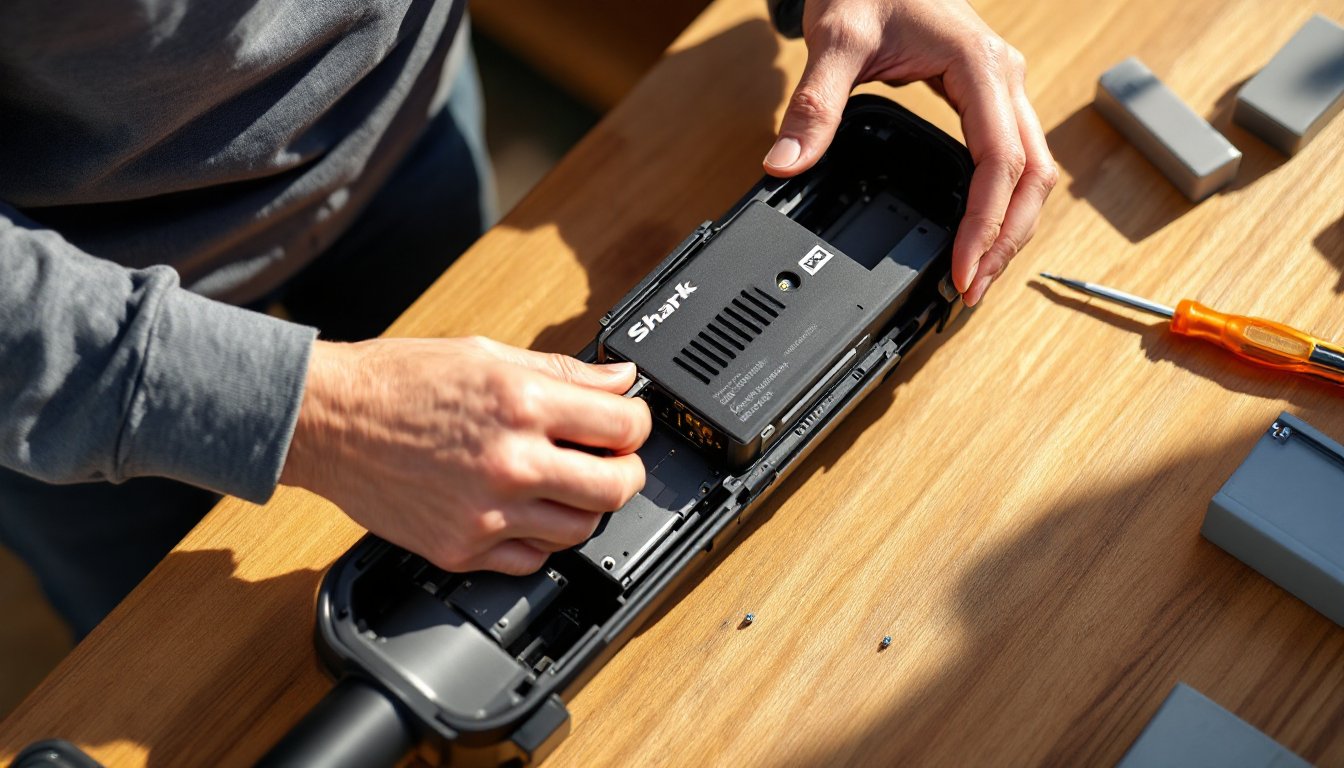
- Remove the bottom plate or brush roll cover. Most Shark models use two or three Phillips-head screws or twist-lock tabs. Keep screws in a small container.
- Lift out the brush roll. It usually slides out once the end caps are freed from their slots.
- Cut away tangled debris with scissors or a seam ripper. Work from the ends toward the center, slicing through hair wraps without cutting the bristles.
- Check the belt position. If it’s off the roller or motor pulley, note that for the next step.
- Inspect the air pathway behind the roller. A clog in the suction channel can cause the motor to overheat and shut down, even if the roller looks clear.
If the roller spins freely by hand after cleaning, tangled debris was the problem. Reinstall it and test. If it still won’t spin under power, move to the next section.
Inspect and Reset the Brush Roll Switch
Shark Lift Away models have a brush roll on/off switch (usually a rocker switch or button on the handle or floor nozzle). This cuts power to the brush motor for bare floors or delicate rugs. If the switch is off, stuck, or faulty, the roller won’t spin.
Troubleshooting the switch:
- Locate the switch. On most Lift Away models, it’s near the handle or on top of the floor nozzle. Some models show a green indicator light when the brush roll is active.
- Toggle the switch several times. Dirt or debris inside the switch housing can prevent full engagement. Listen for a click.
- Check the indicator light (if equipped). No light usually means no power to the motor.
- Inspect wiring connections if you’re comfortable opening the nozzle housing. Look for loose or corroded spade connectors at the switch terminals.
If the vacuum still has strong suction but the roller doesn’t respond to the switch, the motor or belt is likely the issue. Switch failures are less common but can happen after years of use. Replacement switches are available from Shark or third-party suppliers, typically priced under $15.
Examine the Belt for Damage or Wear
The drive belt is a consumable part. Shark uses a flat or geared rubber belt that wraps around the motor pulley and the brush roll shaft. Over time, heat and friction cause the belt to stretch, crack, or snap.
How to inspect and replace the belt:
- Remove the brush roll as described in the blockage section.
- Check the belt condition. A healthy belt is taut, flexible, and free of cracks. A worn belt may appear glazed, stretched, or have visible breaks.
- Note the belt routing. Before removing the old belt, take a photo or sketch the path around the motor pulley and roller.
- Install the new belt. Loop one end over the motor pulley, then stretch the other end over the brush roll shaft. The belt should sit in the grooves without twisting.
- Rotate the roller by hand to confirm the belt engages properly and doesn’t slip.
Shark-branded replacement belts are sold in packs of two for around $8–$12. Generic belts work but may wear faster. According to vacuum maintenance guides from appliance reviewers, belts should be replaced every 6–12 months in high-use households.
If the belt looks fine but the roller still won’t turn, the motor or internal gearing may be damaged.
Clean the Roller and Remove Hair Buildup
Even after clearing visible tangles, hair and fibers can pack into the roller bearings or end caps, creating enough drag to stall the motor. This is especially common in homes with long-haired pets or family members.
Deep-cleaning the brush roll:
- Remove the end caps. Some Shark models have caps that snap or twist off. Others require a flathead screwdriver to pry the retaining clip.
- Soak the roller in warm water with a drop of dish soap for 10 minutes. This loosens embedded grime. Do not submerge the entire nozzle assembly or motor.
- Scrub bristles with an old toothbrush to remove dust and residue. Rinse and let air-dry completely (at least 4 hours) before reinstalling.
- Clean the end cap sockets. Wipe away hair and debris with a damp cloth. Check for cracks or worn plastic that could prevent a snug fit.
- Lubricate the bearing surfaces (optional). A tiny dab of silicone lubricant on the metal shaft where it contacts the end cap can reduce friction. Avoid petroleum-based oils, which attract dust.
Reassemble and test. Many of the most effective appliance cleaning techniques recommend this deep-clean every 3–6 months to maintain peak performance.
Test the Motor and Electrical Connections
If the roller still won’t spin after clearing debris, replacing the belt, and resetting the switch, the brush roll motor may be faulty. This is less common but does happen, especially in vacuums that have overheated or run with a jammed roller.
Diagnostic steps:
- Check for continuity with a multimeter (set to resistance mode). Disconnect the motor wires and probe the terminals. A reading of 5–20 ohms is typical for a small DC motor. Infinite resistance means the motor is open (burned out).
- Inspect wire connections. Look for loose or corroded spade connectors, burnt insulation, or broken solder joints where wires attach to the motor.
- Test with direct power (advanced). If you have a variable DC power supply, you can apply 12–24V (check your model’s specs) directly to the motor terminals. If it doesn’t spin, the motor is dead.
- Check the thermal cutoff. Some Shark models have a resettable thermal fuse in the nozzle. It’s a small button, often red or black, on the motor housing. Press it to reset after the motor cools.
Replacement brush roll motors are available from Shark or third-party suppliers for $25–$50. Installation requires basic disassembly but is straightforward. If you’re not comfortable with electrical work, Shark’s authorized service centers can replace the motor, though labor costs often approach the price of a refurbished vacuum.
For homeowners tackling appliance repairs, replacing a vacuum motor is a good starter project, no plumbing or high voltage involved.
Conclusion
Most Shark Lift Away roller issues come down to hair tangles or a worn belt, both fixable in under 30 minutes with basic tools. Start with the simplest checks (blockages, switch, belt) before suspecting motor failure. Regular cleaning every few months prevents most problems and extends the vacuum’s working life. If the motor is dead, weigh replacement cost against a new or refurbished unit.