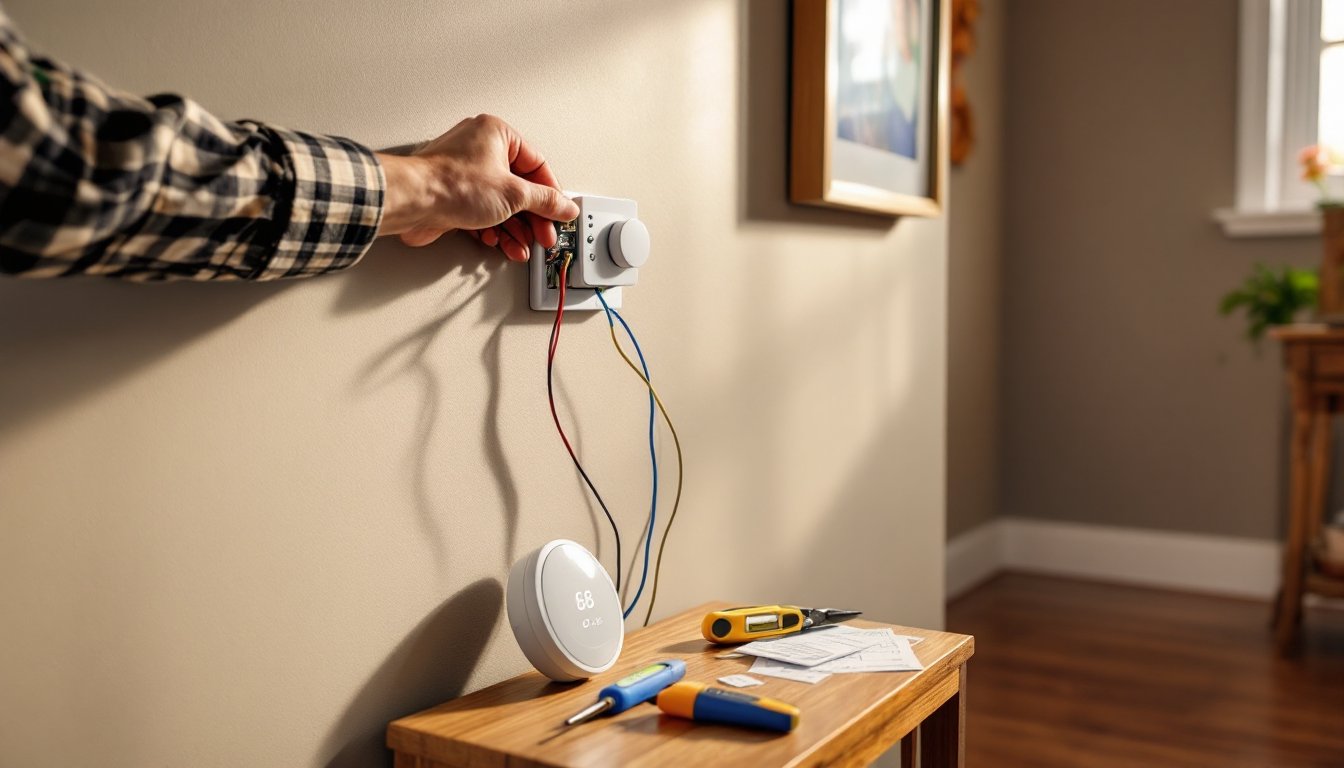
Your heating bill jumps 30% in winter. The second-floor bedroom never warms up. There’s a draft you can’t find no matter how many times you walk the perimeter with a wet hand. Most energy loss in homes happens invisibly, through gaps in insulation, around window frames, or at electrical penetrations. A thermal leak detector makes these problems visible by showing temperature differences on surfaces. It’s like giving yourself X-ray vision for heat loss, and it’s one of the most useful diagnostic tools a homeowner can own.
Table of Contents
ToggleKey Takeaways
- A thermal leak detector uses infrared imaging to reveal invisible energy losses through air infiltration and insulation gaps, making it essential for identifying hidden heating and cooling cost sources.
- Air leaks account for 25-40% of heating and cooling energy loss in typical homes; using a thermal leak detector helps homeowners pinpoint exactly where to seal and insulate for maximum energy savings.
- Consumer-grade thermal cameras priced between $300-$800 offer the best value for homeowners, providing sufficient resolution and accuracy to detect problems without the cost of professional-grade equipment.
- Optimal scanning conditions require at least a 20°F temperature difference between indoors and outdoors; early morning or evening on cold or hot days produces the clearest thermal signatures without false positives.
- Beyond energy efficiency, thermal leak detectors reveal hidden moisture intrusion and electrical hazards—catching these problems early prevents costly water damage, mold, and fire risks.
- Start air sealing projects with high-yield, low-cost fixes like weatherstripping attic hatches and caulking windows; document findings with thermal images to guide contractors and verify work completion.
What Is a Thermal Leak Detector and How Does It Work?
A thermal leak detector is a handheld infrared camera, also called a thermal imaging camera or IR camera, that detects temperature variations on surfaces. Unlike regular cameras that capture visible light, these devices measure infrared radiation emitted by objects and translate it into a color-coded image. Hot areas show up as red, orange, or yellow: cool areas appear blue, purple, or black.
The technology works through an infrared sensor array that reads surface temperatures across thousands of points simultaneously. Most consumer models measure temperatures from -4°F to 752°F with accuracy within ±2-3°F. When you aim the detector at a wall, it shows you where cold outdoor air is infiltrating (appearing as blue spots on a warm interior wall) or where heated air is escaping (showing as hot spots on exterior scans).
These devices don’t see through walls, they read surface temperature. That’s an important distinction. If your wall cavity has no insulation, the surface will be cooler, and the detector will show it. If there’s an air gap around a window frame, cold air cools the drywall around it, creating a visible thermal signature.
Professional energy auditors use thermal imaging to locate missing insulation, air infiltration points, moisture intrusion, and even electrical hot spots that could indicate overloaded circuits. Homeowners can use the same technology to prioritize weatherization projects and verify that insulation contractors did complete work.
Why Every Homeowner Should Consider Using a Thermal Leak Detector
The Department of Energy estimates that air leaks account for 25-40% of heating and cooling energy in a typical home. That’s money leaving through gaps you can’t see with your eyes. A thermal detector identifies exactly where those losses occur, so you’re not guessing where to caulk or add weatherstripping.
Beyond energy bills, thermal imaging reveals hidden moisture problems before they cause structural damage. A cold spot on a ceiling might indicate a roof leak soaking insulation. A warm spot on an exterior wall in winter could mean a plumbing leak behind the drywall. Catching these early saves thousands in water damage and mold remediation.
Electrical safety is another benefit. Overheated outlets, circuit breakers, or connections show up as hot spots on a thermal scan. The National Electrical Code (NEC) doesn’t require thermal scans for residential work, but many electricians use them to spot problems during panel upgrades. Homeowners can do the same basic check, if an outlet or breaker is significantly hotter than others under normal load, it’s worth calling an electrician.
You’ll also validate contractor work. After paying for blown-in insulation or air sealing, a quick thermal scan confirms complete coverage. If you see cold spots where there shouldn’t be any, you have documentation to request corrective work before the crew leaves.
Types of Thermal Leak Detectors: From Budget to Professional
Thermal leak detectors range from $30 smartphone attachments to $3,000+ professional-grade cameras. Here’s how they break down:
Smartphone thermal attachments ($200-$400) plug into your phone’s charging port and use an app to display thermal images. Resolution is typically 80×60 pixels to 206×156 pixels. These work fine for basic leak detection, finding drafty windows or missing insulation is possible even at lower resolution. They’re compact, easy to use, and don’t require a separate device. Trade-off: image quality is limited, and temperature measurement accuracy is lower.
Handheld spot IR thermometers ($30-$80) aren’t true thermal cameras, they measure temperature at a single point using a laser pointer for aim. You won’t get an image, but you can scan a wall or ceiling and watch the temperature readout change. Useful for checking specific areas if someone points you toward a problem, but too slow for whole-home surveys.
Consumer thermal cameras ($400-$1,200) are purpose-built devices with 160×120 to 320×240 pixel resolution. Many include interchangeable lens options, onboard image storage, and more accurate temperature measurement (±1.5°F or better). These are what serious DIYers and home inspectors use. Battery life is typically 4-5 hours, and images can be exported for documentation. Brands like FLIR and Seek Thermal dominate this segment.
Professional-grade cameras ($1,500-$10,000+) offer 640×480 pixel resolution or higher, advanced analysis features, and rugged construction for daily field use. Unless you’re doing energy audits professionally, these are overkill for residential applications.
For most homeowners, a $300-$600 consumer camera provides the best balance. It’s detailed enough to find real problems, affordable enough to justify for one or two major projects, and useful long-term for maintenance checks.
How to Use a Thermal Leak Detector in Your Home
Timing matters. Run your scan on a cold day (below 35°F outside) with the heat on, or on a hot day (above 85°F) with AC running. You need at least a 20°F temperature difference between indoors and outdoors for air leaks to show clear thermal contrast. Early morning or evening works best, direct sunlight on exterior walls will create false hot spots that aren’t actual leaks.
Turn off ceiling fans and close interior doors to rooms you’re not scanning. You want still air so convection currents don’t interfere with surface temperatures. Walk through the house slowly, scanning walls, ceilings, and floors from about 5-10 feet away. Get closer for detail once you spot an anomaly.
Adjust the camera’s temperature range (sometimes called “span” or “level”) to highlight smaller differences. If the auto range shows everything as orange, manually narrow the range so cold leaks appear blue and warm areas show red. This takes practice, most cameras let you lock the range, then pan across a wall to see variations.
Document everything. Take photos with the thermal camera, then a regular photo of the same spot for reference. Note the location in the house and the temperature difference. This becomes your priority list for air sealing and insulation work.
Safety note: Wear safety glasses if you’re inspecting attics or crawlspaces. If you’re checking electrical panels, ensure the panel cover is on and you’re observing from a safe distance. Never remove a panel cover while energized unless you’re a licensed electrician.
Common Areas Where Thermal Leaks Hide
Start with these high-yield spots where leaks concentrate:
- Attic hatches and pull-down stairs: Usually the worst offender. The hatch perimeter and the folding stair frame rarely have adequate weatherstripping or insulation.
- Recessed lighting in insulated ceilings: Older can lights create a thermal chimney. The thermal imaging techniques used by professionals reveal these as bright hot spots in summer or cold spots in winter.
- Electrical outlets and switches on exterior walls: Each box is a hole in the wall. Codes require vapor barriers, but retrofit insulation often bypasses these penetrations.
- Band joists (rim joists): Where the foundation meets the first floor framing, insulation is often thin or missing.
- Window and door trim: Even new windows leak at the rough opening if the installer didn’t air-seal before trimming.
- Plumbing and HVAC penetrations: Anywhere a pipe, duct, or vent goes through an exterior wall or ceiling.
- Fireplace dampers: Metal dampers rarely seal completely. You’ll see cold air dropping down the flue.
- Basement sill plates: The wood plate bolted to the foundation often has no sealant or insulation behind it.
Don’t assume newer homes are tight. Inspecting new construction with a thermal camera often reveals missed insulation around windows, incomplete air sealing at the attic plane, and gaps at HVAC boot connections.
What to Do After Detecting Thermal Leaks
Prioritize by impact and ease. Air sealing generally delivers faster payback than adding insulation, and it’s cheaper. Start with accessible leaks you can fix yourself:
Weatherstrip doors and attic hatches: Use adhesive-backed foam or silicone bulb weatherstripping rated for compression. This is a $20 fix that can cut attic heat loss by 30%.
Caulk around window and door trim: Pull off the interior casing if there’s a visible gap between the jamb and rough opening. Use low-expansion foam (not the big-gap stuff, which can bow jambs) or backer rod plus caulk. For painted trim, paintable acrylic latex caulk works: for stained trim, use clear silicone.
Install foam gaskets behind outlet and switch covers on exterior walls: They cost about $0.25 each and take ten seconds to install. Turn off the circuit first.
Seal the band joist from inside the basement or crawlspace: Cut 2-inch rigid foam insulation (XPS or polyiso) to fit between floor joists at the rim, then foam the edges with one-component spray foam. This is a moderate DIY project, wear a respirator with organic vapor cartridges when using spray foam in confined spaces.
For recessed lights: If they’re not IC-rated (insulation contact), you’ll need to replace them with LED retrofit kits or IC-rated housings before insulating over them. Non-IC lights can overheat if buried in insulation. This may require an electrician depending on local code and your comfort level with electrical work.
For larger issues, missing wall insulation, inadequate attic coverage, get quotes from insulation contractors. Use your thermal images to show exactly where work is needed. Request a post-job thermal scan to verify completion.
If you found electrical hot spots, call a licensed electrician. An outlet running 20°F hotter than others on the same wall is a fire risk. Don’t attempt panel or circuit work without proper licensing and permits.
Moisture problems require fast action. A cold spot with high moisture often indicates an active leak. Check the roof, flashing, plumbing, or HVAC drain lines depending on location. If drywall or insulation is wet, it needs to be removed and dried before mold grows. This is often insurance-claim territory, and restoration pros have industrial dehumidifiers and moisture meters to verify dryness.
Choosing the Right Thermal Leak Detector for Your Needs
Match the tool to your project scope and budget. If you’re planning a single whole-house air sealing project and want data to guide your work, a $300-$400 smartphone attachment will get the job done. Resolution isn’t critical when you’re looking for large temperature swings at windows and doors.
If you’re tackling multiple properties (rental units, flips, or helping family), or if you want ongoing maintenance capability, invest in a dedicated handheld camera in the $500-$800 range. Look for models with at least 160×120 resolution, ±2°F accuracy, and onboard storage. Having a built-in screen means you’re not juggling a phone and the detector, and image quality is noticeably better.
Consider rental. Some tool rental centers and home improvement chains stock thermal cameras for $40-$75 per day. If you only need it for a weekend, renting beats buying. Just reserve it in advance, they’re popular during heating and cooling seasons.
Key features to check:
- Resolution: Higher pixel count reveals smaller temperature differences. 160×120 is minimum for serious leak detection: 320×240 is better.
- Temperature range and accuracy: Make sure the camera measures the range you need. For building diagnostics, -4°F to 250°F covers most scenarios.
- Battery life: Scanning a whole house takes time. Look for 4+ hours of runtime or a swappable battery.
- Image storage and transfer: Can you save images onboard or export them to a computer? Documentation is half the value.
- Focus: Some budget models are fixed-focus, which limits close-up detail. Adjustable focus adds versatility.
Ignore gimmicks like “AI leak detection” or “auto diagnosis” features, they’re marketing fluff. A clear thermal image and accurate temperature readout are all you need. The rest is learning to read what you see, which comes fast after scanning a few rooms.
Many DIY home maintenance guides now recommend annual thermal scans as part of routine upkeep. It’s smart, catching a small leak early prevents big repairs. Once you own the tool, that annual check costs nothing but an hour of your time.