The real estate market has shifted. Homebuyers aren’t just looking at square footage and granite countertops anymore, they’re asking about network protocols, smart thermostats, and security camera integration. Connected technology has moved from luxury add-on to legitimate selling point, influencing appraisals, buyer expectations, and how quickly properties move. If you’re planning to sell or just curious whether that video doorbell you installed last year actually adds value, understanding the intersection of smart home tech and property worth matters more than ever.
Table of Contents
ToggleKey Takeaways
- Smart home realty now directly influences property values, with homes featuring integrated smart tech commanding 3–5% higher perceived value in competitive markets and selling faster than non-connected properties.
- High-impact, low-cost upgrades like smart doorbells, smart locks, and programmable thermostats ($400–$700 total) deliver better ROI than expensive whole-home automation systems and can be installed in a weekend.
- Smart thermostats reduce HVAC costs by 10–23% annually, while hardwired smart switches and integrated security systems appeal to energy-conscious and safety-focused buyers more than removable devices.
- Interoperability and unified control through a single ecosystem (Alexa, Google Home, or Apple HomeKit) significantly boost buyer appeal, whereas mismatched devices from incompatible platforms actually hurt property value.
- Professional monitoring systems and video doorbells with 1080p+ resolution are now expected features in 2026, influencing buyer perception of modern homes and generating more showing requests with fewer lowball offers.
- Leave user manuals, setup guides, and app credentials in writing to reassure buyers that installed smart home technology is user-friendly and won’t require extensive troubleshooting after purchase.
What Is Smart Home Realty and Why Does It Matter?
Smart home realty refers to how connected devices and automation systems impact residential property values, marketability, and buyer appeal. It’s not about cramming every IoT gadget into a house, it’s about thoughtfully integrating technology that solves real problems: security, energy efficiency, convenience, and accessibility.
The concept matters because buyer demographics are changing. Millennials and Gen Z now make up the majority of homebuyers, and they grew up with smartphones and voice assistants. For them, a home without smart home integration feels outdated, like buying a car without Bluetooth.
From an appraisal standpoint, smart tech sits in a gray area. Traditional appraisal methods don’t always capture the value of a professionally installed security system or a whole-home automation hub. But comparative market analysis increasingly shows that homes with integrated smart features sell faster and sometimes command higher prices, particularly in competitive urban and suburban markets. According to real estate market analysis, homes with smart features can see a 3–5% increase in perceived value depending on the local market and quality of installation.
Smart home realty also matters for aging-in-place considerations. Features like voice-controlled lighting, automated door locks, and remote monitoring appeal to older buyers and their families looking for safer, more accessible living environments.
How Smart Home Technology Impacts Property Values
The impact isn’t uniform, it depends on what you install, how well it’s integrated, and whether it fits the property and neighborhood. A $15,000 whole-home automation system in a starter home might not return much, but a $2,000 investment in smart locks, a video doorbell, and a programmable thermostat can move the needle.
Energy efficiency upgrades tied to smart tech often provide measurable ROI. A smart thermostat like the Ecobee or Nest Learning Thermostat can reduce HVAC costs by 10–23% annually, according to manufacturer data and third-party studies. That’s a tangible selling point when utilities are expensive. Pair that with smart lighting on motion sensors and LED bulbs, and you’ve got a home that appeals to cost-conscious buyers.
Security features carry psychological weight. Homes with visible security cameras, smart locks, and monitored alarm systems make buyers feel safer, which can speed up decision-making. Research from home security comparisons shows that properties with professionally monitored systems or integrated video doorbells receive more showing requests and fewer lowball offers.
Interoperability is critical. A mishmash of incompatible devices from different ecosystems (Amazon Alexa, Google Home, Apple HomeKit) can actually hurt value. Buyers want systems that work together smoothly. If you’ve built around a single platform or use a hub that ties everything together, that’s a selling point. If your devices don’t talk to each other, it’s a headache.
One caution: removable devices don’t always transfer value. A buyer won’t pay extra for smart plugs or a portable speaker. Built-in or hardwired systems, smart switches, integrated door locks, whole-home audio, carry more weight because they’re permanent fixtures.
Top Smart Home Features That Attract Buyers
Not all smart tech is created equal. Some features generate genuine interest: others are novelty items that don’t move the market.
Smart Security Systems and Entry Controls
Video doorbells are table stakes in 2026. Models with 1080p or higher resolution, two-way audio, and cloud or local storage options (Ring, Arlo, Eufy) are now expected in many markets. Installation is straightforward, most mount to existing doorbell wiring, though battery-powered versions work for homes without a low-voltage doorbell transformer.
Smart locks with keypad or smartphone entry eliminate the need for physical keys and allow temporary access codes for contractors, cleaners, or guests. Look for locks compatible with your door’s backset (usually 2-3/8″ or 2-3/4″) and deadbolt hole diameter (standard 2-1/8″). Brands like Schlage Encode and Yale Assure offer both Z-Wave and Wi-Fi connectivity, so they integrate with most hubs.
Whole-home security systems with professional monitoring (ADT, SimpliSafe, or self-installed options with subscription monitoring) appeal to families. Hardwired systems require low-voltage wiring and may need permits depending on jurisdiction: wireless systems are easier for DIYers but rely on battery maintenance.
Motion-sensor floodlights with cameras (e.g., Ring Floodlight Cam) add perimeter security. Install these on weather-rated junction boxes and ensure your home’s Wi-Fi reaches the mounting location, exterior cameras often struggle with signal strength.
Energy-Efficient Climate and Lighting Solutions
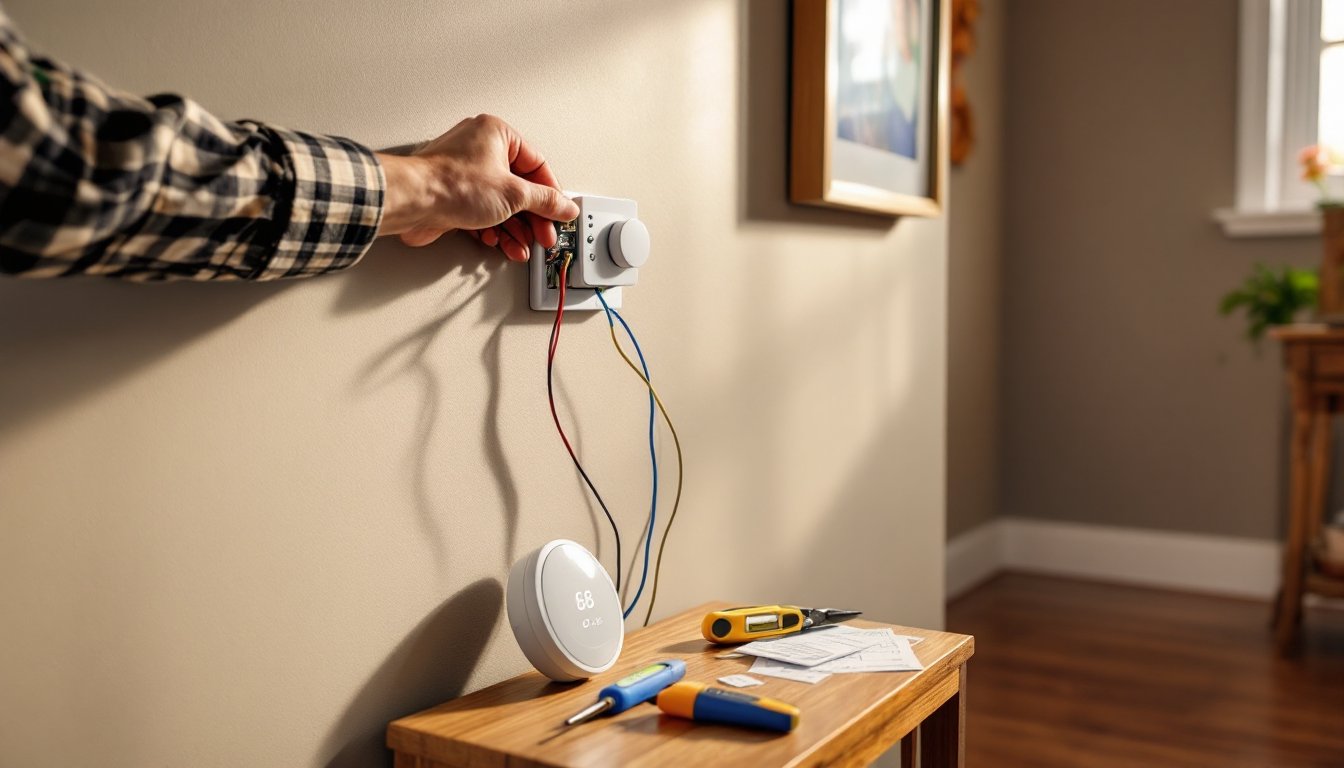
Smart thermostats top the list for ROI. Installation typically involves shutting off HVAC power at the breaker, removing the old thermostat, and connecting labeled wires (R, C, W, Y, G) to the new unit. Most homes have a C-wire (common) for continuous power: if yours doesn’t, you may need to run one from the furnace or use an adapter. This is a straightforward DIY project for anyone comfortable with basic electrical work, but if you’re unfamiliar with HVAC wiring, hire an HVAC tech.
Efficiency gains come from learning schedules, geofencing (adjusting temperature when you leave), and remote control. Buyers appreciate seeing energy reports and knowing the system adapts without manual adjustments.
Smart lighting means more than color-changing bulbs. Hardwired smart switches (Lutron Caseta, Leviton Decora) control standard bulbs and stay functional even if the buyer doesn’t use the app. Installation involves replacing existing switches, turn off the circuit breaker, remove the old switch, connect line (hot), load (to fixture), neutral (if present), and ground wires, then mount the new switch. Homes without neutral wires in switch boxes may need compatible switches or an electrician to pull new wire.
Motion-sensor lighting in hallways, closets, and exterior entries adds convenience and efficiency. Occupancy sensors reduce energy waste and appeal to eco-conscious buyers.
Smart blinds or shades (Lutron, Somfy) integrate with lighting and climate systems to manage heat gain and privacy. These are higher-end features that work best in homes with lots of south- or west-facing glass.
Installing Smart Tech Before Selling: Is It Worth the Investment?
It depends on your budget, timeline, and local market. Strategic installs can boost appeal without very costly, but overspending won’t guarantee a return.
Focus on high-impact, low-cost upgrades first. A smart doorbell, smart lock, and programmable thermostat together run $400–$700 and can be installed in a weekend. These are visible, functional, and appeal to a wide buyer base. They signal that the home is modern and maintained.
Avoid high-cost custom systems unless you’re in a luxury market. Whole-home automation with integrated lighting, shades, and multi-room audio can cost $10,000–$50,000. Most buyers won’t pay a premium for that level of customization, especially if they prefer different brands or ecosystems. If you’ve already installed such a system, highlight it in marketing materials, but don’t expect dollar-for-dollar recovery.
Consider home automation services if you want a professional setup. Installers can ensure clean wiring, proper integration, and code compliance. This matters for hardwired systems like security panels or in-wall speakers. DIY installs are fine for plug-and-play devices, but permanent fixtures benefit from professional work.
Timing matters. If you’re six months from listing, install now so the tech feels integrated and established. If you’re listing in two weeks, skip it, buyers may not notice or value hasty additions, and you won’t have time to demonstrate functionality.
Leave user manuals, warranty info, and app login instructions (or reset devices to factory settings so buyers can set up their own accounts). A binder with setup guides and support contacts adds polish and reassures buyers they won’t be stuck troubleshooting alone.
Be ready to leave the devices. Buyers expect installed smart tech to stay unless you explicitly list it as an exclusion in the contract. Ripping out a smart thermostat or doorbell after closing creates friction and can derail deals.
What Buyers Look for in a Smart-Enabled Home
Buyers want smart tech that’s intuitive, reliable, and doesn’t require a degree in network engineering to operate. They’re evaluating whether the system enhances daily life or becomes another thing to maintain.
Ease of use is paramount. If a home uses a single ecosystem (all Alexa-compatible, for example), that’s a selling point. If devices require three different apps, separate hubs, and manual bridge connections, it’s a turnoff. Unified control through one app or voice assistant wins.
Buyers appreciate when smart devices are demonstrated during showings. Have the lights turn on automatically when someone enters, or show how the thermostat adjusts remotely. Passive features like motion-sensor lighting or automated blinds make a stronger impression than a list of devices in the listing description.
Reliability and support matter. Buyers worry about obsolescence. Will the hub get firmware updates? Is the company still in business? Established brands (Google, Amazon, Apple, Lutron, Honeywell) carry more confidence than startups with questionable longevity. Highlighting devices from well-known manufacturers eases concerns.
Accessibility features resonate with a growing segment of buyers. Voice control, automated door locks, and smart home accessibility tech help aging parents or family members with mobility challenges. According to home technology trends, universal design and accessibility-focused automation are among the fastest-growing buyer priorities in 2026.
For apartment dwellers or buyers who’ve rented smart homes, smart home devices for apartments like non-invasive locks and battery-powered sensors are familiar and less intimidating than hardwired systems.
Finally, buyers want to know what stays and what goes. Be explicit in your listing. If the Nest cameras are part of a subscription you’re canceling, say so. If the smart switches and locks stay, call that out. Transparency avoids disputes and builds trust.
Connected technology isn’t a magic bullet, but when installed thoughtfully and integrated well, it moves homes faster and can command a modest premium, especially in markets where buyers expect modern amenities. Whether you’re a seller weighing an upgrade or a buyer evaluating listings, understanding which features deliver real value (and which are just buzzwords) is key to making smart decisions.